

Top 10 Common Plastic Molding Materials
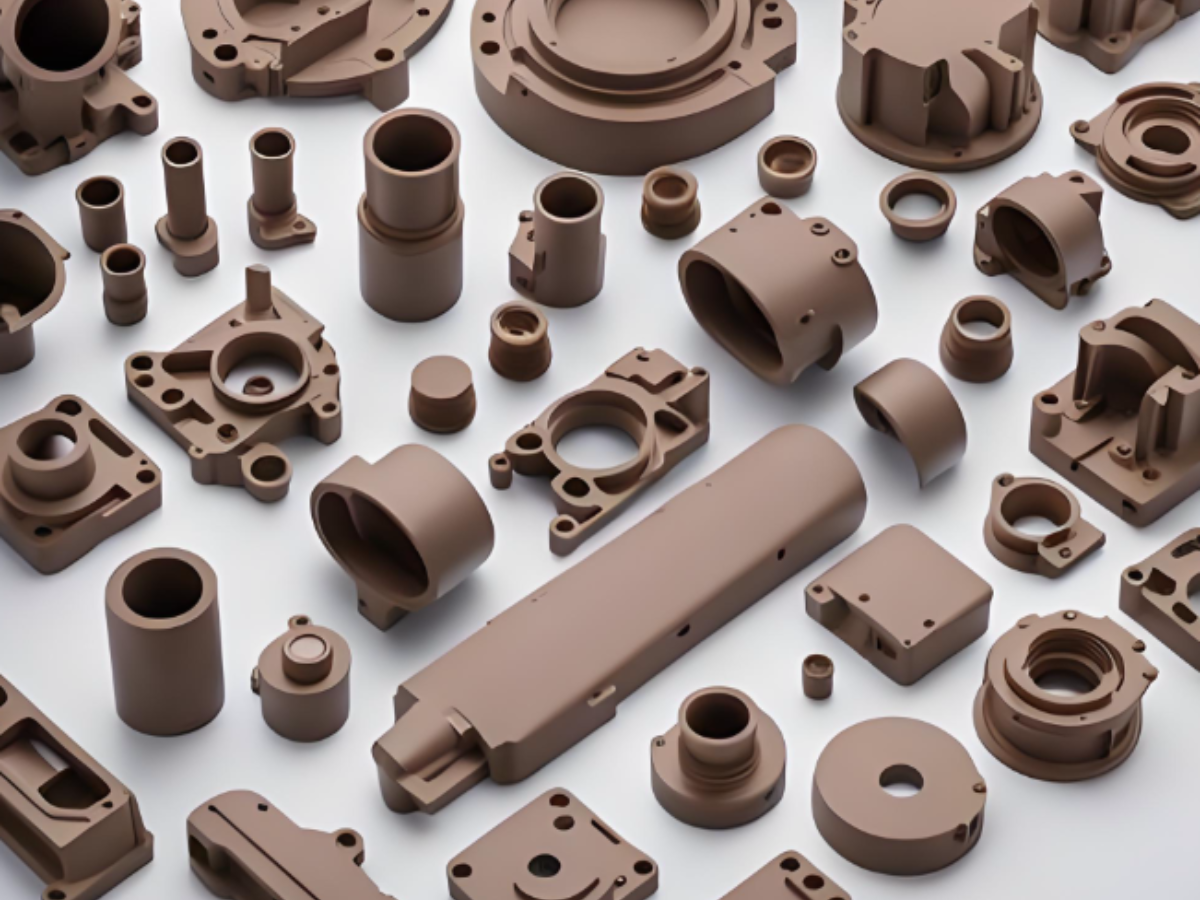
Table of Contents
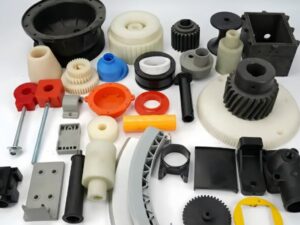
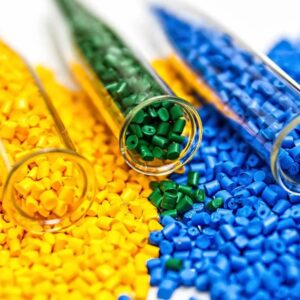
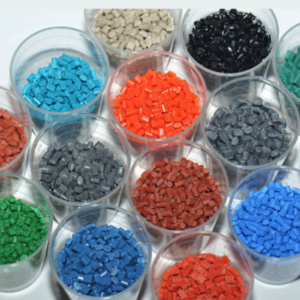
Selecting the right material is one of the most critical decisions in any injection molding project. This choice influences everything from the final product’s performance and durability to its cost and aesthetic appeal. With a vast array of available plastics for injection molding, the selection process can be overwhelming for even seasoned product managers, engineers, and procurement specialists.
This guide is designed to simplify that process. We will explore the most common plastics used in injection molding, outlining their unique properties and typical applications. More importantly, we provide a clear framework to help you make an informed decision and select the ideal material for your specific project.
Common Plastic Molding Materials
- Acrylonitrile Butadiene Styrene (ABS)
Key Characteristics: ABS is a thermoplastic that is tough and impact resistant and is rigid with a glossy finish. Chemical exposure does not affect it and it performs well in varying load conditions. Overall, it is a versatile all-round plastic.
Common applications: LEGO, power tools and electronics.
Advantages/Disadvantages: The most considerable strength is the strength to cost ratio along with the quality of the finish of the product. The biggest weakness is the UV resistance (or lack thereof) and being less suitable to pets or other living creatures outdoors without other additives or coatings for protection.
- Polycarbonate (PC)
Key Characteristics: Similar to other materials, the most notable feature is the impact strength. that, of course, along with clarity and stiffness. This material is shatterproof so it can be used for just about anything where safety is a priority. The material can be used for higher or lower temperature needs as it keeps the same properties across a wide range.
Common Applications: Safety glasses, medical device components, automotive headlights, electronic displays, and reusable water bottles.
Advantage/Disadvantage: This material is the best option for materials that need both high strength and high transparency. The downside is that it does scratch easier than other materials, and with some chemicals, it can stress crack.
- Nylon (Polyamide, PA)
Key Characteristics: This type is a family of polymers, it has high strength, when comparing similar materials it is known to be softer so it is a bit more flexible as well. This type of nylon has a low friction coefficient which is important for materials that move.
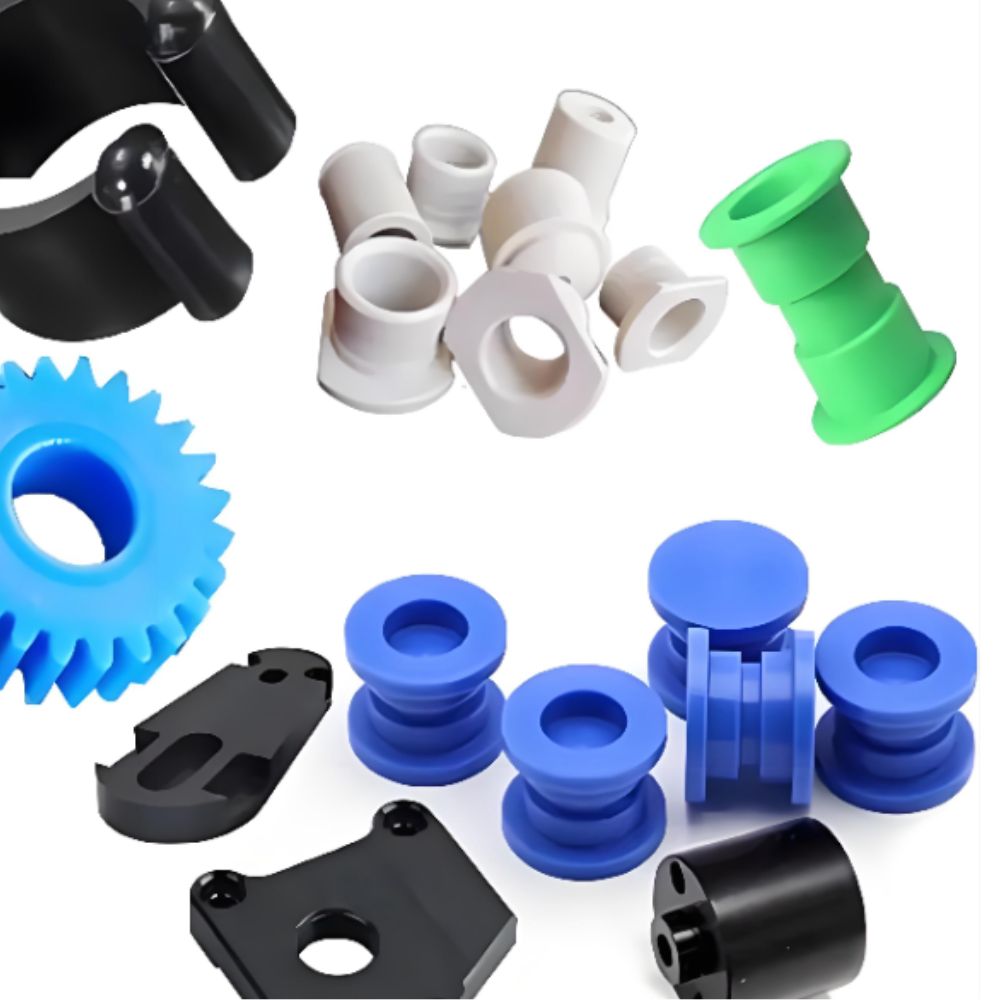
Common Applications: Gears, bearings, bushings, fasteners, zip ties, and high-wear mechanical parts in automotive engines.
Advantage/Disadvantage: Nylon is exceptional when it comes to durability and resistance to damage, and as such can easily be used to replace some metals. But if used, care must be taken to either keep moisture out, or account for the fact that it is hydroscopic, and as such may affect the moisture stability and mechanical properties.
- Polypropylene (PP)
Key Characteristics: As one of the most common and widely used plastics, it is also complex and flexible. It also has high resistance to water and moisture, fatigue, and most chemicals. It can be made to be semi-reusable and flexible, or even more rigid, and it is known for making great living hinges (thin little cuts that can bend easily when made).
Common Applications: It is used in food packaging and in the containers that food comes in, even in automotive parts such as bumpers and battery cases. Also used in medical vials and in ordinary items such as storage bins.
Advantage/Disadvantage: Its greatest and best advantage is that it is very flexible and the costs to make it are very low. However, it also has a big disadvantage in that it doesn’t work very well in cold as it can easily become fragile, and is also very sensitive to the damage UV rays can do.
- Polyethylene (PE)
Key Characteristics: Polyethylene is relevant to us because it is the most used plastic in the world, and comes in various densities. The high density is very strong and rigid, while the low density is very flexible. It is also important for its chemical resistance, as well as its low cost and ability to act as a good electrical insulator.
Common Applications: HDPE is used in milk jugs, bottles of cleaning products, and pipes. LDPE is utilised for plastic bags, films, and flexible containers.
Advantage/Disadvantage: Its low cost and ease of processing are the main advantages. Its main disadvantage is the low strength and poor temperature resistance in contrast to other more engineered plastics.
- Polystyrene (PS)
Key Characteristics: Polystyrene is of General Purpose Polystyrene (GPPS), which is also very clear and hard but brittle, and of High Impact Polystyrene (HIPS), which is tougher and opaque. It is also well-known for the foam version (Expanded Polystyrene, Styrofoam).
Common Applications: Disposable cutlery and yoghurt pots. Other applications include plastic model kits, CD jewel cases, and housings of appliances and toys.
Advantage/Disadvantage: Polystyrene is low cost and clear in its general purpose form. Its brittleness, poor chemical resistance, and low clarity make it less affordable and more useful.
- Polyoxymethylene (POM / Acetal)
Key Characteristics: POM, or Acetal and Delrin, is an engineering thermoplastic characterised by its closure and low friction. POM is the material that bridges the elasticity between plastics and metals.
Common Applications: Items produced that require a high level of precision are things like gears, bearings, links on a conveyor belt, and fasteners. In addition, it is also used in consumer electronic devices and the fuel system in cars.
Advantage/Disadvantage: The self-lubricating attributes of the compound along with its low-friction characteristics is a great advantage as it is excellent for use with moving mechanical parts. On the other hand, it is able to endure poor adherence to strong adhesives and is able to withstand poor resistance to strong acids and bases.
- Thermoplastic Polyurethane (TPU)
Key Characteristics: The compound is a polyurethane, and is a flexible rubber and soft plastic, and is widely customisable in abrasion resistance, elasticity, and toughness. Hardness on flexible to rigid sides is variable and it is a highly adaptable elastomer.
Common Applications: In the following items: phone cases, wheels that can pivot, grips on some power tools, some sports equipment, and the soles of some types of shoes.
Advantage/Disadvantage: The major positives are the high level of flexibility and its resistance to abrasion. On the other hand, it is a more expensive option than other flexible compounds and may require special use in some processes.
- Acrylic (PMMA)
Key Characteristics: Polymethyl Methacrylate (PMMA), or acrylic, is known for its exceptional transparency, weather resistance, and scratch resistance. It’s a lightweight and shatter-resistant alternative to glass.
Common Applications: Lenses, automotive light covers, retail displays, and medical fluidics.
Advantage/Disadvantage: Acrylic’s optical clarity and UV stability are its greatest strengths. Its weakness is that it’s more brittle than PC and can crack under high impact.
- Polyetheretherketone (PEEK)
Key Characteristics: PEEK is a high-performance polymer at the top of the plastics pyramid. It boasts exceptional mechanical strength, chemical resistance, and stability at extremely high temperatures (up to 250°C / 482°F).
Common Applications: It is used in highly demanding applications in aerospace (components of aircraft), medical (implants for the spine), and automotive (bearings, piston components) fields.
Advantage/Disadvantage: The ability to function in extremely harsh conditions that would be difficult for most plastics to contend with is its most significant strength. The most significant weakness, though, is that its applications are largely restricted to the most important and critical due to a prohibitive cost.
How to Choose the Right Plastic Moulding Material
The “best” material is therefore a function of the requirements of your project.
Define mechanical property requirements
Define the physical requirements of the part. Think of resistance to wear (Nylon, POM), strength (Peek, Polycarbonate), and flexibility (TPU, PP).
Consider environmental factors
The lifespan of the part is determined by the operating conditions. Look at temperature (PA, PEEK for high temperatures), and UV (Acrylic, UV-stabilised ABS). Moisture (Nylon, PP, PE).
Order Chemical Defences Needs
Recognise the contact with chemicals, solvents, or oils. PP and PE resist numerous chemicals. Nylon and PEEK manage hydrocarbons efficiently.
Comply with Regulatory and Safety Obligations
Numerous industries have rigid norms. Think about food contact (FDA-compliant PP, PE), medical (PC, PEEK), or burn resistance (UL94 ratings).
Establish your Design Goals
The Design and the texture are essential. Use PC or Acrylic for clarity. You can colour most plastics; the texture of the final product is affected by your choice of material.
Keep Performance and Cost in Equilibrium
Make your choice in tandem with the financial plan. Engineering plastics (PA, POM) are of median cost, while commodity plastics (PP, PE) are cheap; and high-performance polymers (PEEK) cost more. Look at the entire cost of ownership, rather than just the cost of the raw material.
Conclusion
The selection of the most appropriate plastic moulding material is a tactical choice, with several variables like product function, environment, and financial plan to be taken into account. If you are not too sure about which material is best for your work, contact our engineering team today to get a free consultation. You will be able to choose the best material in order to guarantee the success of your product.
Frequently Asked Questions (FAQ)
Q: What is the first step in the plastic injection molding process?
A: The first step is making a detailed mold tool. This step is necessary for making a good final product.
Q: What is one thing injection molding is known for that other molding methods are not?
A: Injection molding is known for being able to produce a large number of the same detailed part with a low cost for each part.
Q: Why is designing for manufacturability (DFM) important for parts that could be molded?
A: DFM streamlines the part design for the mold processes which in turn reduces design and production defects and makes the overall cost go down substantially.
Q: What is the significance of a material’s melt flow index during molding?
A: The melt flow index signifies the ease at which a plastic can flow when in a liquid state which therefore is a great indicator to show whether a molds features can easily be filled.
Q: Is it possible to inject mold biodegradable plastics?
A: Yes, there are biodegradable polymers that can be processed, but during injection molding production, they tend to be more temperature and moisture sensitive.