

Mastering High-Temp Injection Molding: 6 Critical Tips

Table of Contents
1.Recognizing Your Resins: What is High-Temperature Plastic
What is considered a high-temperature plastic?
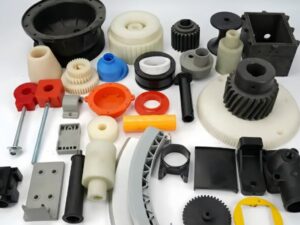
High-temperature plastics are defined a little differently. They are considered high-temperature plastics is a heat-deflection temperature above 150°C (302°F). These plastics are able to retain their mechanical and chemical properties even when subjected to high levels of thermal stress.
Some high-temperature plastics are:
- PEEK (Polyetheretherketone): High chemical resistance and high strength.
- PEI (Polyetherimide): High heat resistance and great flame retardant properties.
- PPS (Polyphenylene sulfide): Sought after for great dimensional stability.
The packing list is the data sheet. Understanding the properties of the selected resin when a glass transition temperature (Tg) and melting point (Tm) are provided is the name of the game. Otherwise, you continue to fly blind.
2. Moisture Control is Non-Negotiable
Why is drying so critical for high-temp resins?
Many high-temperature resins are hygroscopic. This means that they will absorb moisture from the atmosphere. When wet resin is molded, the moisture will be heated and turn to steam. This can cause cosmetic issues such as splay and voids. Even worse, the moisture can cause hydrolysis, a reaction in which the polymer chains are broken and the final part is left with severely compromised strength.
Standard desiccant dryers may not be good enough for these extreme materials. High temperature resins typically need to be dried for 4 hours plus at temps over 150°C. To ensure the resin is at optimal dryness, the dew point must be at -40°F/C or lower. Getting a high performance dryer is not a recommendation if you want to have quality parts.
3. Tooling and Mold Design Essentials
Why can’t I use standard aluminum molds?
Tooling holds up for molding with high-performance plastics. However, soft steel or aluminum molds cannot hold up due to the high abrassiveness of the glass and hyper at resins and extreme thermal cycling. Hardened steel, for example H13 or S7, must be used to prevent rapid tool wear and failure.
How do I manage thermal requirements?
A mold needs to be hot, usually between 150 degrees Celsius and 200 degrees Celsius, to ensure the resin has the required crystallization. If the mold is too cold, it will ‘freeze’ the plastic too quickly and create poor mechanically functioning amorphous structures.
Because of these extreme temperatures, standard water lines are dangerous. At a temperature of 100 degrees Celsius, water quickly turns to steam and can create a safety hazard. You need to use oil heaters or high-pressure water systems designed for high-temperature uses. Furthermore, you should place high-temperature insulating metal plates between the mold and the machine platens to prevent heat transfer, which could damage your injection molding machine.
Finally, do not overlook venting. High-temperature resins off gas during processing. Inadequate venting traps this gas and ruins part quality due to diesel effect burns.
4. Optimize the Barrel and Screw
What is the ideal residence time?
Residence time is the parameter that defines the length of time the material stays in the heated barrel. Finding the right residence time is tricky. If the residence time is too long, the material will burn and degrade. If the residence time is too short, the material will not uniformly melt and inconsistencies will form.
It is ideal to have the smallest barrel capacity utilization (30-50%) to prevent material from having excessive heat history.
Furthermore, high-temp plastics, especially those that are reinforced with glass or carbon fiber, are very abrasive. Using standard equipment is a bad idea. To avoid premature failure, your machine should have bimetallic barrels and wear-resistant screws and check rings.
5. Precise Temperature Control
How narrow is the processing window?
High-temp resins have a processing window as opposed to commodity plastics like polypropylene. Molding has a “Goldilocks” zone.
- If too cold: there are short shots or the filling of the part is incomplete due to internal stress.
- If too hot: the material degrades and results in a loss of physical properties.
Profile heating on the barrel is how to manage this. Set a cooler temperature on the feed throat to prevent melting and bridging. From there the heat is increased to the nozzle for a uniform melt to be ready for injection.
6. Purging and Shutdown Procedures
Can I just turn off the machine?
Absolutely not. You cannot simply turn off the machine with high-temp resin inside. As the machine cools, the resin will freeze into a solid rock. Upon restart, the screw may snap as it tries to turn against the solidified plastic.
You must purge the machine with a thermally stable, intermediate-temperature purging compound before shutting down or reducing the heat. This transitions the barrel to a material that can be easily reheated or cleaned out later.
Safety Warning: Purging at temperatures of 700°F+ is dangerous. It requires strict Personal Protective Equipment (PPE) and rigorous safety protocols to avoid severe burns from molten plastic splatter.
Next Steps for Your Molding Project
To perform high-temperature injection molding, one needs industry-specific tools, contoured process control, and a thorough comprehension of material science. Even though the learning process may take a while, the ability to create parts enduring extreme temperatures is a major competitive edge.
If you are uncertain whether your current setup can handle these demands, do not attempt to guess. Prior to steel cutting, reach out to our engineering team for a design-for-manufacturability (DFM) review.
Frequently Asked Questions (FAQ)
Q: What are the major advantages in the employment of high-temperature plastics?
A: Comparing to many, they have better the strength-to-weight attributes, have greater chemical resistance, can endure very high operating temperatures for long periods of time, and do high temperature long-term conditioning. They will not degrade over long periods of high temperature conditioning as will many other polymers.
Q: How can I tell if my material is dry enough?
A:Use a moisture analyzer before going with a batch. If you stripped material and you are relying on drying time, you are setting yourself to problematic results. You want to avoid hydrolysis and moisture content is the key variable.
Q: Am I able to run PEEK on a regular injection molding machine?
A: Typically no. A lot of standard molding equipment doesn’t have a the right barrel temperatures, i.e. can maintain up to 400°C, and do not have the right capabilities for heating up the mold. A machine with a high-heat package is what you will most likely want.