

Injection Molding Pros and Cons: Is It Right for Your Project?

Table of Contents
Product managers and engineers inevitably tackle the same production quandary. The goal is to derive a production method with the best quality, speed, and cost efficiency. However, most of the time, picking one of the three is essential. However, as a business grows from a prototype to a commercially available product, the dynamic of the production method changes. One is not producing one unit, rather, one is producing three thousand.
This is one of the steps in the process of deciding to use injection moulding for your business. Therefore, we need to analyse the pros and the cons of this method of production.
What is Injection Moulding?
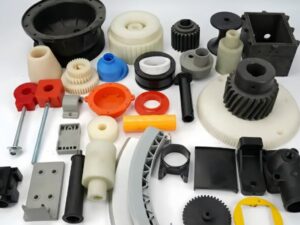
Simply put, this method is one of the best ways to mass-produce the same plastic components. This is done by injecting heated plastic into a mould whereby the material cools and shapes into a final product. It is most likely responsible for most of the plastic items one encounters. Heating, injecting and cooling.
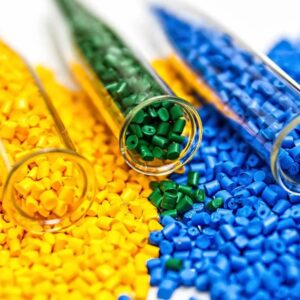
First, plastic granules are dropped from the hopper into a chamber, along a heated barrel. A reciprocating screw simultaneously crushes the granules and mixes the plastic, heating it as it moves. When a desired viscosity is reached, the screw is easily moved backwards. This allows the screw to act as a plunger, forcing the semi molten plastic into the injection mould (the tooling).
The process is not gravity fed, as this can lead to incomplete fills. Instead, the system is closed and a very high pressure is used to fill even the most intricate cavities. Once the part cools, the system depressurises and the mould opens to eject the part. The mould is reset and the process continues.
The Materials for Injection Moulding
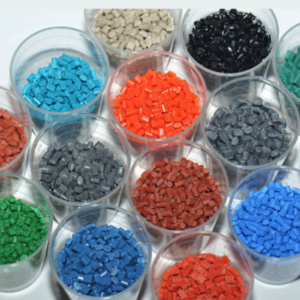
The remarkable versatility of injection moulding materials is one of its greatest benefits. Materials specification shifts from one thermoplastic and thermoset resins to an entire family of them as the R&D engineer attempts to achieve the optimal correspondence of the material properties to those desired from the finished product.
The most common resins are those in the family of engineering thermoplastics such as the flexible thermoplastic elastomers (TPE, TPU), the nylon (polyamide) engineering thermoplastics (PA6, PA66) and polycarbonate, the high-temperature resistant engineering thermoplastics polyetheretherketone (PEEK) and polyetherimide (PEI), thermoplastic polyolefins, and amorphous thermoplastic polystyrene (the so-called commodity plastics).
Also available are some engineering thermoplastics for specific applications such as low-friction polyoxymethylene (POM), acrylic (PMMA) for high transparency, and some polymer matrix composites. The merging of different materials in one part using techniques such as co-injection or insert moulding to offer additional functionalities, broadens the engineering design options. All of these materials ensure that there is most certainly a resin appropriate for any project based on the specified properties, be it high strength, flexibility, heat resistance, optical clarity, or low cost.
The advantages of injection molding
Efficiency and Speed
Given that plastic injection moulding can accomplish tasks quickly and efficiently, it saves time and money. In consideration of how intricate the element is, cycle times can be as brief as 15 to 30 seconds. When you use multi-cavity moulds—tools that manufacture several parts in one shot—output rates increase exponentially. This rapid moulding technology enables manufacturers to create millions of parts a year and reduces the cost tremendously.
Detailed and Complex Geometry
When compared to other manufacturing techniques, such as CNC machining or thermoforming, there are other methods that struggle to create complex geometries. This is because the plastic is injected at high pressure, allowing it to get a tight hold on the corners of the mould. This permits complex shapes and intricate details as well as micro-features that would be difficult to create at a cost-efficient price to be made.
Repeatability and Consistency
When it comes to manufacturing at a mass production industry, the millionth part must look and be the same as the first one. Injection moulding of plastic offers unrivalled repeatability due to the fact that the moulding is made of either aluminium or steel and machined to the mould’s structure resulting in parts created to high tolerances. Such precision makes a significant difference in quality assurance due to the seamless assembly of components, enhancing craftsmanship with injection moulding plastic as well.
Material Efficiency
With CNC machining and other forms of subtractive manufacturing, there is some initial waste that is cut away, and there is no way to recycle that waste. Conversely, with injection moulding, the process is additive, and the only waste is the thermoplastic that is not reused and that is encapsulated in sprues, runners, and other forms of thermoplastic that can be reground and reused in the process, greatly cutting environmental and cost impacts of thermoplastic waste.
Extensive Material Selection
We can perfectly accommodate the operational and engineering thermoplastic and liquid silicone rubber, because the process is compatible with a large range of these materials, to meet requirements across a wide range of end applications in terms of strength, flexibility, heat resistance, or biocompatibility.
Minimal to No Post Processing
There is reduced time and cost to other manufacturing methods, as there is no other process required to achieve the excellent aesthetic quality that a solid inner part of the mould delivers. Custom tooling can achieve a large range of other finishes, and a wide range of other features can be added that can be engraved in sequence as part of the process.

The disadvantages of injection moulding
These disadvantages of injection moulding should be the most considered, as no process is completely perfect or ideal, and there are always some risks that, if not planned for in advance, can be a large problem for the development of the product.
Significant Upfront Expenditures
A critical factor that makes injection moulding cost prohibitive will be the cost associated with the injection moulding machine. Specifically, the expense tied to the design and machining of the tools made of steel for injection moulding is very expensive. Sometimes the costs associated with these tools can go into the tens of thousands of pounds range. If 50 is the only quantity needed, the costs associated with this machine will be very high. The process can only be considered cost effective if the initial costs can be spread over many injection mouldings.
Time to Complete
It is impossible to push a button and just print a part. There is a moulding process that encompasses design, machining and a great deal of testing that can go on to perfect a mould prior to entering into the production stage. This can take a great deal of time. If, for example, time is of the essence for a market test, the time required to create a mould for production can be extremely detrimental.
Design Limitations
To achieve the best possible results, engineers must consider certain industry manufacturing standards and example results. Draft angles will need to be designed into the part to ensure that upon completion of a part, the part can be removed from the mould with ease. Wall thickness must be considered to prevent the part from warping. Undercuts must be avoided as these tend to trap the part inside the mould. The design of a mould is very different from the design of a part that will be made using a mould. The design must be adaptable to the finite nature of the mould design and the construction.
Significant Up-Front Investment
Injection moulding requires considerable initial investment within tooling and setup. Because of this high fixed cost, it is exceedingly difficult to amortise values over small produced volumes, and therefore the per-part pricing becomes exceedingly high outside of a few thousand units within the small volume range.
Conclusion
The optimal manufacturing process is a complex choice, and this choice is bogged down by cost constraints, time factors, and the overall quality of the product. However, the advantages of injection moulding, especially the ability to produce a high volume for a significantly lower unit cost, are true, but it is not without significant investment and design discipline.
When you have high volume needs, and you have a design that is finalised, injection moulding is, without a doubt, the best way to make that product widely available. However, should your product still be in the early stage of development, or should you be on a limited production run, then there will be other options that will serve you much better.
Is your project ready for the mould? Reach out to our engineering team today for a consultation. We can review your CAD files and help you determine the most cost-effective path to production.
Frequently Asked Questions (FAQ)
Q: Can injection moulded parts withstand outdoor UV exposure?
A:Yes, it most certainly can with some UV resistant additives, or UV resistant materials, for example, ASA.
Q: Is injection moulding suitable for food-safe products?
A:Certainly, if it is with FDA registered materials, for example, some standards of PP or PET.
Q: How intricate can the geometry of an injection moulded part get?
A: Very intricate, with details like undercuts, threads, and living hinges.
Q: What is the usual amount of time required for injection moulding?
A: From tooling to first articles, typically four to eight weeks.
Q: Is it possible to produce flexible, rubber-like parts with injection moulding?
A: Yes, using thermoplastic elastomers (TPE) or liquid silicone rubber (LSR).