

CNC Machining vs. Injection Molding: A Detailed Comparison

Table of Contents
Every product designer and engineer has to think how to take an idea from CAD to a real product. You can visualize it in your head and make it real, but this is where the budget can be spent.
There are two titans of the industry: CNC Machining and Injection Molding. While both can manufacture high-quality and durable pieces, they function on completely different levels. One subtracts material, the other one adds material. One is more agile, the other more scalable.
With this guide, we will be putting together a side-by-side comparison of CNC Machining and Injection Molding. At the end of the guide you will know what method fits your budget, time, and quantity best and make the right decision from the best available options of your project’s stage.
What is CNC Machining?
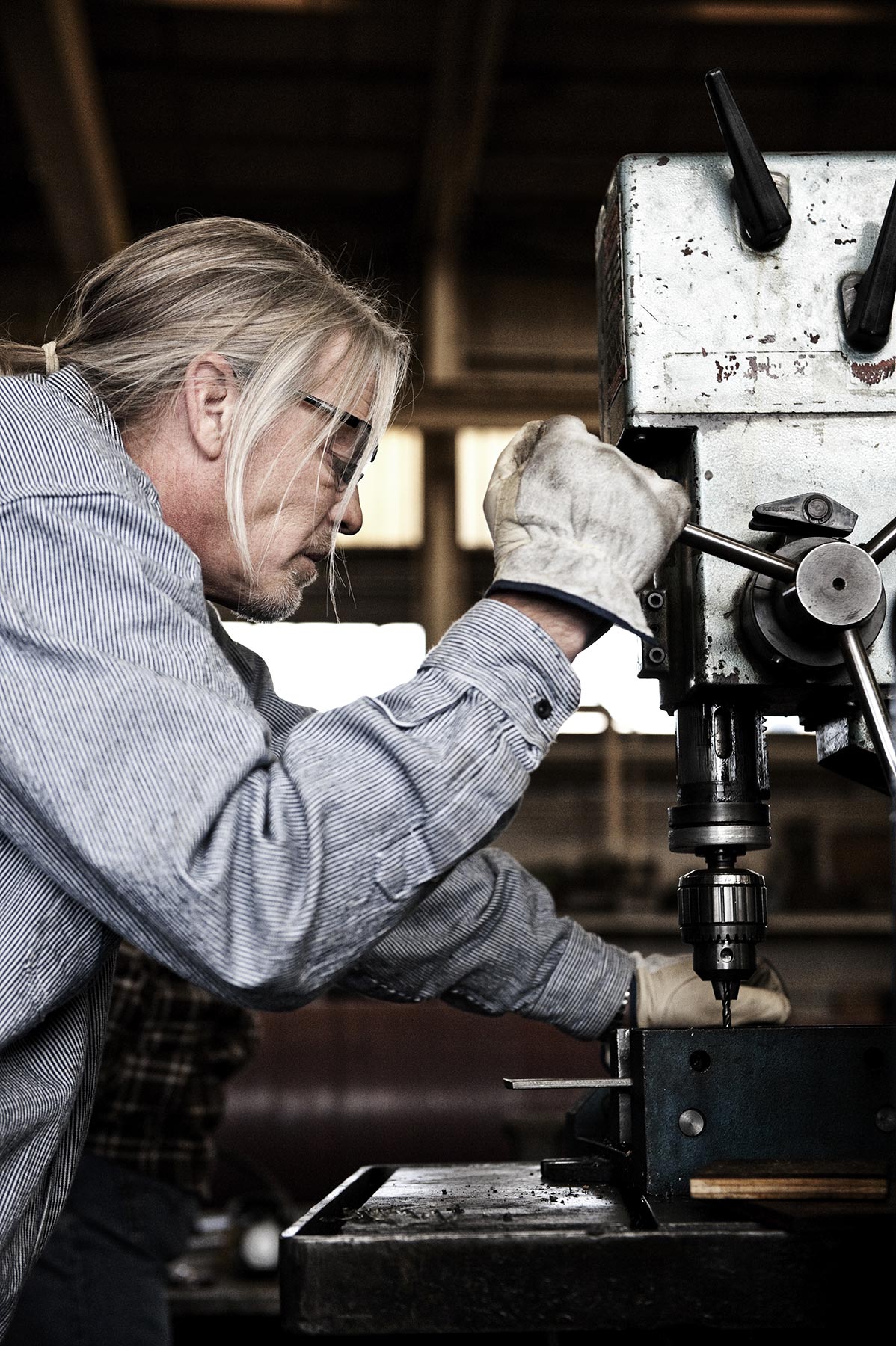
CNC Machining (Computer Numerical Control) is a subtractive manufacturing process. Consider a sculptor chiseling away at a block of marble. That’s how CNC works but instead with high speed automated cutting tools. The computer reads code from a design file and partitions the material (workpiece) until the desired figure is achieved.
CNC machining works from solid blocks of material (metal, plastic, and wood) and is especially known for producing parts with extreme structural integrity, high precision, and great surface finishes.
What is Injection Molding?
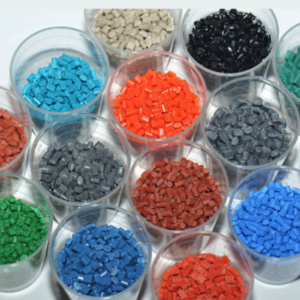
One of the available processes for manufacturing is known as injection molding. It is not a subtractive process like cutting. Instead, a thermoplastic granule is melted and injected into a special metal mold under high pressure. It is allowed to cool into the desired shape of the cavity
The injection molding process is a great way to produce identical products at great volume. It is one of the foremost processes of producing items at mass scale and once a mold is designed, it is capable of duplicating the same item thousands, or even millions of times.
Key Comparison Factors
To settle the CNC Machining vs. Injection Molding debate for your specific project, we need to look at five critical decision-making criteria.
1. Production Volume and Scalability
This is often the deciding factor. The “break-even point” is the magic number where the cost-effectiveness flips from one method to the other.
- CNC Machining:CNC Machining: For small production volumes, this is the better option, typically from a small prototype to around 1,000 pieces. There is no need to create a mold, so you can immediately start producing parts..
- Injection Molding:For large production volumes (1,000+ pieces), this method is better. The parts are produced in seconds, making the process incredibly fast and it is better for scaling production..
If you graph the cost of production for each unit vs. the total production volume, CNC Machining will be a straight horizontal line. The cost to manufacture the first unit is the same as manufacturing the 500th. Injection molding will have an initial spike for a higher cost due to the required tooling, however, it will have an increase in production efficiency costing only a few cents each time.
2. Cost Implications
Your budget needs to account for two types of expenses: upfront investment and per-part pricing.
Upfront Costs
There is a major low barrier for entry for CNC machining. There is basically no costs for tooling. You only take up costs for programming (setup) and then the machining time. On the other hand, injection molding has higher costs up front. The design and machining of the mold is necessary, and that can take anywhere from a few thousands to hundreds of thousands, depending on how complex it is..
Per-Part Costs
Here is the trade-off. CNC parts are more expensive individually because the machine takes time to cut each unit, and there is material waste involved. Injection molding per-part costs are significantly lower. Once that expensive mold is paid for, the actual material and cycle time cost is minimal.
3. Lead Times and Speed
How quickly do you need to reach the market?
-CNC Machining: If you need to have the parts completed by Friday, CNC is the way to go. Because there’s no tooling to create, and with a skillful machinist, parts can go from a digital file to a completed part in just a few hours to a few days.
-Injection Molding: This method takes time and patience. Designing, machining, and testing the mold can take time – weeks, maybe even months. However, after that initial mold is created, the production rate is significantly faster and gains a lot of efficiency compared to the CNC method.How fast do you need to go to market?
4. Material Selection and Properties
Both methods offer robust material options, but there are distinct differences in how those materials perform.
CNC Materials
Since CNC removes material from a solid block, you are working with the raw material in its strongest state. You can machine almost anything: aluminum, stainless steel, titanium, rigid plastics, and even wood. The final part retains the mechanical properties of the original block.
Injection Molding Materials
Injection molding focuses heavily on resins. There is a vast array of available options, including flexible, rigid, and food-grade plastics. While you can mix in additives for strength (like glass fibers), the material properties are determined by how the plastic cures in the mold. It is worth noting that while Metal Injection Molding (MIM) exists, standard injection molding is generally limited to plastics and elastomers.
5. Design Freedom and Tolerances
CNC Machining
In the context of computer numerical control systems (CNC) machining, creating one-off custom parts that meet geometric and tolerance criteria is easier compared to other batch-manufacturing processes. With CNC machining, the end result is highly reproducible as the computer program provides the exact parameters needed for execution.
However, CNC machining is most compatible with simple geometries, where geometric features can be easily accessible to the rotating cutting tool. Features such as rounded sloped walls or gentle curves are also easier to machine as compared to step features with vertical walls. Depending on the rotation of the cutting tool, the method of creating circular features can also create round corners as an additional advantage. However, there are also limitations such as the inability to make perfectly square corners and to access vertical walls that are highly recessed.
Injection Molding Geometry
While molding permits constructions of intricate design and geometry, it comes with its unique set of rules that must be followed a. For the parts to be ejected from the mold, you have to think of and incorporate a design that allows for draft angles (slight tapers). If the design lacks it, it will be virtually impossible for the parts to be removed from the mold. Moreover, you have to think about the walls of your design to keep a uniform wall thickness to minimize the chances of the plastic from either collapsing, sinking, or warping as it cools.
On the bright side, molding can be highly repeatable, however, there is a limit, as to how much you can design around needing very tight tolerances as it becomes extremely costly to obtain, since it will require very high precision tooling to get to that level.

How to Choose?
Still on the fence? Here is a quick cheat sheet to help you decide.
Choose CNC Machining if:
- You need prototypes or a small batch (under 1,000 units).
- Speed is critical, and you need parts immediately.
- You require high precision or are using difficult-to-mold materials like specific alloys.
- Your design is still evolving. (It is much easier to update a CAD file for CNC than to scrap and rebuild a metal mold).
Choose Injection Molding if:
- You are ready for mass production and have finalized your design.
- You need the lowest possible price per unit to maximize profit margins.
- Your parts require complex geometries that would be difficult or impossible to machine.
- You need consistent repeatability over thousands or millions of parts.
Making the Right Manufacturing Choice
In the end, the CNC Machining vs. Injection Molding debate doesn’t boil down to which one is “better”. It is, rather, about which one is best suited for the particular stage of your product development lifecycle.
In fact, the most successful products in the world do both. They take advantage of the flexibility CNC allows for prototyping and market testing; then, when demand is established and the volume is high, they switch to injection molding.
Take stock of your current volume and budget, as well as your timeline. The numbers usually point very clearly in one direction.
Upload your CAD files to get a quote. You get to see a direct price comparison for CNC machining and injection molding, enabling you to make the most informed decision.
Principles of Design in Injection Molding
Design Recommendations for Parts
-Uniform Thickness of Walls: Maintaining the same wall thickness should be the first consideration in injection molding design. This guarantees even cooling and flow to eliminate sink marks, warping and internal stresses in molded parts.
-Do Not Incorporate Thick Sections: Thick sections are a primary source of defects as they cool slower, and this precipitates sink marks and voids. If strength becomes a requirement, employ strategic ribbing to replace the overall wall thickening.
-Relaxed Joints: Use gentle, tapered transitions when a thickening of a wall is necessary. Do not use gridwork steps as this produces flow lines, acts as a stress riser, and weakens the part.
Drafting and Undercuts
-Obtain Draft Angles: For all vertical walls, a draft angle of 1-2 degrees is required, and this is necessary to improve the part’s surface finish while preventing damage.
-Avoid Undercuts: They should be eliminated as they complicate the mold and increase the overall cost.
-Do Not Overcomplicate: Keep in mind that increased mold complexity for undercuts, e.g. side actions and collapsible core mechanisms, directly affect the low cost per part goal of the project.
Rib and Boss Design
- Optimum Rib thickness: When designing ribs, consider this injection molding design principle: ribs should not exceed 50-60% the thickness of the neighboring wall. This provides appropriate strength and stiffness of the molded piece and prevents sink marks from showing on the other side of the wall.
- Reinforcing Boss Structures: To improve the reliability of your molded part consider adding ribs or gussets to supports for screw assembly, this will ensure the integrity of the part through assembly and assembly use.
- Generous Radii: When ribs and bosses are provided sufficient base fillets for the ribs and bosses, this will greatly reduce stress concentration and improve the part’s fracture toughness.
Surface Finishes for Molded Parts
Thermoplastic
The range of surface finishes for thermoplastic parts is nearly unlimited and is only determined by the surface of the mold used. The surface can affect the perception of parts greatly and can also affect the ability of a part to cover ejection and flow marks. Examples of such finishes are the polished glossy surface for transparent parts and lenses, and the heavily textured matte finishes that can obscure scratches and enhance the grip. Some options for this are the SPI finishes, SPI A1 for the mirror polish and SPI C1 for fine stone. Examples of custom finishes are chemical texturing and leather grains, as well as painting and pad printing from other processes.
Polished: High gloss, mirror surface is present for lenses and other eye attractive parts.
Textured: Defect hiding, grip enhancement, and matte finish are present for etched surfaces.
EDM: Slight grain presents a natural finish from the mold from electrical discharge machining.
Liquid Silicone Rubber
The range of Liquid Silicone Rubber (LSR) surface finishes is dictated by low fluidity and high-temperature processing. Because of its low viscosity, a glossy surface finish is typical, which is preferred in medical and food-contact applications. This surface finish minimizes bacterial adherence and is easier to clean. In applications where grip is needed, we apply a matte surface finish to the mold. Similar to thermoplastics, LSR is rarely processed post-molding. Therefore, the mold surface finish character is the only factor that defines the finish character of the final part.
Glossy: Smooth, non-porous surface that is highly releaseable, making it ideal for hygienic applications.
Matte: Adds a rough surface finish texture to components to enhance grip and tactile feel.
Grit Blasted: Increased surface roughness provides a satin-like surface that aids air venting in the mold.
Conclusion
Are you ready to take advantage of the accuracy and productivity that comes from injection molding on your next project? Our factory embraces injection molding along with rigorous quality assurance to provide you with top tier molded parts. With low cost/part and low material waste, we are your best manufacturing process partner. Reach out to us to make your parts in your designs.
Frequently Asked Questions (FAQ)
Q: Is CNC machining stronger than injection molding?
A: Generally, yes. Because CNC machining carves parts from a solid block of extruded stock material, the internal structure is uniform and free of the internal stresses that can sometimes occur during the heating and cooling process of injection molding.
Q: Can I use the same design for both CNC and injection molding?
A: Not always. While the general shape might look the same, a design optimized for CNC might fail in injection molding due to a lack of draft angles or uneven wall thickness. Conversely, a molded design might have features that are impossible to machine. It is best to design for the specific manufacturing process you intend to use.
Q: What is the standard tolerance for CNC vs. Injection Molding?
A: Standard CNC tolerances are typically around +/- 0.005”, but can be much tighter (+/- 0.001”) with precision machining. Standard injection molding tolerances are usually around +/- 0.005” to +/- 0.010”, depending on the resin used. Tighter tolerances in molding significantly increase tooling costs.
Q: Which process produces more waste?
A: CNC machining produces more waste material, as it subtracts from a block (creating chips or swarf). Injection molding is more material-efficient, as runners and sprues (waste plastic) can often be reground and recycled into the process.
Q: Is 3D printing a good alternative to CNC or injection molding?
A: For very low volumes or complex geometries, yes. 3D printing is excellent for rapid prototyping. However, for functional end-use parts, CNC machining usually offers better strength, and for volume production, injection molding offers much better speed and cost-efficiency.