

Aerospace Injection Molding: Precision, Compliance, Speed

Table of Contents
The field of Commercial Aviation is, arguably, the most competitive industry in the world due, in part, to the high costs of fuel. Every aspect of an aircraft is under scrutiny to maximize efficiency and profitability.
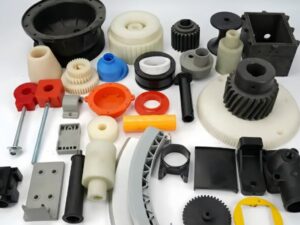
At the core of this industry strategy is aerospace injection molding. It is the industry standard at this point for the manufacture for the high strength and ultra lightweight plastic components, which are tough enough to replace machined aluminum and steel, and for which the plastic can be structured for similar high order complexities.
This guide examines the intersection of aerospace injection molding and high performance engineering materials and high weight performance engineering and non-engineering materials, and high performance engineering and non-engineering materials, including PEEK and Ultem, AS9100 compliance and required engineering design for successful outcomes.
Why Use Injection Molding for the Aerospace Industry?
Optimization of performance rather than cutting corners is what drives the transition from metal to plastic. Aerospace injection molding companies tackle the triad of weight, cost, and complexity.
Weight Reduction and Fuel Economy
The primary motivator for the use of thermoplastics is weight savings. Performance polymers readily achieve seamless weight to strength ratios and are 50% lighter than metals. The cumulative weight savings from the use of thermoplastics in hundreds of components, including brackets, fasteners, ducting, and seat frames, decreases fuel burn and increases payload and operational capacity.
Repeatability and Precision
There is no margin for error in safety-critical applications. Injection molding with scientific process validation creates thousands of pieces and bleeds off with a delta of no more than 0.001 from the target dimension. Manual machining, with human error and tool wear, is not needed. Process validation guarantees the first part is the same as the 10,000th.
Cost-Efficiency for Volume
Although the initial investment for injection molding tooling is higher than for CNC machining, the tufts of collections has a serendipitous payoff, both in time and in expense, for medium-to-high volume runs in the form of a significant drop in incremental expense per unit. Relative to subtractive manufacturing, which is CNC machining where significant amounts of material are machined away as scrap, injection molding has an economy of waste. This form of waste economy serves a distinct economic purpose for an entire fleet that is perpetually needing thousands of injection molded replacement components.
Complex Geometries
Multifunctional parts are a hallmark of aerospace design. With the aid of injection molding, engineers are enabled to design intricate and complex geometries that would be difficult, if not impossible, to machine. The efficient machining of complex geometries would be unachievable Snap-fit closures, internal cooling channels, plus a variety of ergonomic contours also serve to integrate the singular form of the molded part and simulate reduction in the time cost associated with assembly techniques that are adequate to fasten singular parts into a conduit, or into an aircraft.
Materials Used in Aerospace Injection Molding
Aerospace components must survive harsh environments, from the freezing temperatures of cruising altitude to the high heat of engine proximity. This requires a specific class of engineering thermoplastics.
High-Performance Thermoplastics
From the extreme cold temperatures of cruising altitudes to the extreme heat of the engine proximity, aerospace components must endure extreme levels of temperatures. This requires a certain type of engineered thermoplastic.
PEEK: Polyetheretherketone. PEEK is well known for its extreme mechanical strength and its amazing chemical stability. Due to these properties, PEEK is often used in structural components that are in place of metal. PEEK is also great for high temperature and hydrolysis resistant fuel systems.
PEI: Ultem. Ultem is considered a gold standard for the cabin interior because of its extreme heat resistance and inbuilt flame retardance chemical properties. Ultem also easily meets all flame, smoke, and toxicity (FST) standards and requirements without any additive.
LCP: Liquid Crystal Polymer. LCP is often used for small and complex electrical connectors and sensors because it easily fills in very thin walls and has high dimensional stability. LCP also maintains its high stability.
Compliance with Standards
Materials used in the cabin must meet rigorous safety standards, specifically FAR 25.853. This Federal Aviation Administration regulation governs flammability requirements for compartment interiors, ensuring that materials are self-extinguishing and do not release toxic smoke during a fire. Additionally, many parts must adhere to specific MIL-STD (Military Standard) specifications for durability and environmental resistance.
Structural Reinforcements
To further bridge the gap between plastic and metal, base resins are often reinforced with additives. Glass fibers or carbon fibers can be compounded into the plastic to significantly increase stiffness and structural rigidity without adding substantial weight.
Injection Molding Processes for the Aerospace Industry
To meet the required quality for flight-traceable materials, the necessary plastic injection molding process goes beyond simple melting of the materials. Specialized procedures are developed to ensure each individual part fulfills the design intent.
Scientific Molding
The biggest plastic injection molding companies serving the aerospace industry are molding companies are using the principles of scientific molding. This principle machine setting goes beyond the simple data science approach. Instead, it focuses on the actual conditions of the plastic in the mold. The molders are able to detect and correct variations in quality to ensure duplicate quality of the parts in the production within the lots.
Insert Molding
Insert molding combines the best properties of two materials. It consists of molding plastic around a pre-placed metal insert which can be a brass fastener or a steel bushing. This technique presents the advantage of the lightweight which can be used to manufacture a plastic body with durable threading or conductivity metal which is needed to fasten components in avionics and panels in interiors.
Overmolding
Overmolding is important when components need to include surface for vibration dampening or ergonomic interfaces. The process is used in cockpit equipment and control. It improves the grip of a control and reduces fatigue of the pilot. The process is one of the most commonly used. A softer rubber-like material is molded over a rigid substrate.
Quality Control & Traceability
In aerospace, knowing exactly when and how a part was made is a requirement, not a luxury. AS9100 certification is the baseline quality management system for the aerospace industry. It mandates full lot traceability—from the specific batch of raw resin used to the machine parameters and final inspection data. This “cradle-to-grave” accountability ensures that if a defect is ever found, it can be traced back to its root cause immediately.
Common Aerospace Injection Molding Parts
The versatility of injection molding means its applications are found throughout the aircraft.
Cabin Interiors
Plastic molding helps create the passenger area’s finishing touches. Overhead compartment bin latches, seat trim bezels, armrests, tray table arm controls, and window shade dowels are all molded pieces. These interior detailing elements need to be visually attractive, designed to withstand regular use, and meet FST safety regulations.
Avionics and Electrical
Behind the panels, injection molding shields the airplane’s nervous system. Connectors, insulators, and wire harnesses and their housings are molded to provide EMI isolation and thermal insulation to ensure inter-system comms and nav systems are always operational.
Propulsion and Systems
Thermal thermoplastics are designed even in the pathways to the propulsion systems. Engine-adjacent clamps, air ducting systems, and PEEK or PPS made thermal brackets are all designed to take the place of metals to withstand high thermal loads and vibrations while managing airflow and securing fuel line.

Custom Aerospace Prototypes and Parts Design Considerations
Designing for aerospace injection molding requires foresight. A well-designed part prevents costly tooling revisions and production delays.
Design for Manufacturability (DFM)
Engineers should engage with their molding partner early to optimize their designs:
To optimize the overall design of a project, engineers must collaborate with the mold designing partners early on in the process.
- Wall Thickness: Ensuring there is no variation in the thickness of the walls. If there is uneven thickness, the walls will cool unevenly which will then warp, and leave internal fractures and sink marks which will ruin the overall structure.
- Draft Angles: Standing walls must include a tapering (typically 1-2 degrees) of the walls to ensure that there is a clean release of the part from the mold. Without doing draft, parts will have the ability to scuff and drag, causing evidence of a flaw in the mold.
- Tolerances and Shrinkage: It is a known fact that the materials that perform the best (for example, PEEK) are known to be semi-crystalline and experience a high amount of shrinkage as they cool down. It is essential that designers take this factor into consideration when designing the tooling for the aerospace assembly to keep the tolerances precise.
Bridge Tooling
Between the expensive, hardened steel production molds, there is an option for bridge tooling. These molds were made from softer steel or aluminum, which allows for rapid design of prototypes and production on low volume molds. Bridge tooling allows for the testing of functional designs with real materials in a geometry for which high production specs do not exist.
Conclusion
Aerospace injection molding has solidified its place in modern aviation, acting as the bridge between weight reduction goals and uncompromising safety standards. As aircraft designs continue to evolve, the reliance on advanced thermoplastics will only deepen.
Emerging trends are further accelerating this innovation. The integration of 3D-printed tooling is allowing for even faster prototyping cycles, enabling engineers to test complex molded geometries in days rather than weeks. For procurement managers and engineers, the path forward is clear: partner with an AS9100-certified molder early in the design phase. By validating designs for manufacturability at the start, you ensure your project is ready for takeoff.
Frequently Asked Questions (FAQ)
Q: What is the difference between AS9100 and ISO 9001?
A: ISO 9001 is an all-encompassing quality management standard which applies to every industry. AS9100 comprises all the stipulations of ISO 9001, adding close to an additional hundred stipulations which are industry specific, and which place a significant emphasis on risk management and product safety and on the prevention of counterfeit parts.
Q: Can injection molded parts really replace metal in engines?
A: Yes, in specific applications. High-performance polymers, such as PEEK and PPS, are employed for brackets, fasteners, and covers found in propulsion systems. They outperform some metals in high-temperature and high-corrosion environments, but not in the combustion chamber itself.
Q: What is the typical lead time for aerospace injection molding?
A: Lead times depend on complexity. Prototype or bridge tooling is often ready in 2-4 weeks. Hardened production steel molds, however, require 8-12 weeks. After tooling is finished, parts can be produced in rapid succession.
Q: Why is PEEK so expensive compared to other plastics?
A: PEEK is a specialized engineering thermoplastic which has a very difficult and esoteric manufacturing process. The high cost of PEEK is due to its unique and exceptional characteristics; PEEK is one of the very few plastics, in fact, which has high strength, high chemical resistance, and high thermal stability all at once.
Q: Does aerospace injection molding support low-volume production?
A: That would be accurate. Even though injection molding is renowned for mass production, the aerospace sector deals with lower volume production as well (hundreds instead of millions). MUD (Master Unit Die) inserts as well as aluminum tooling make lower volume production economically viable by minimizing the upfront cost for the production of molds.