

A Guide to Plastic Resins for Injection Molding
Table of Contents
There are thousands of different types of materials for molding and every single time it comes down to choices that feel more and more endless. Producers and engineers are bombarded with different molding materials that have different properties, prices, and behaviors and try to choose the best one possible.
In this guide we will take the toughest and most complex molding materials and the properties of these and help you choose the best one for your specific application.
What are Plastic Resins?
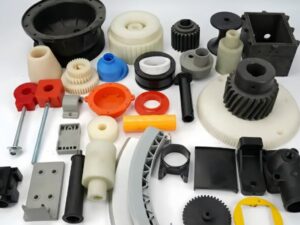
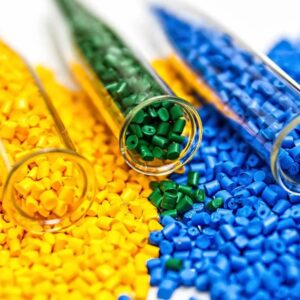
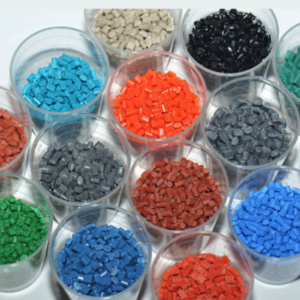
In manufacturing, the raw materials for production of plastic items are referred to as the plastic resins. In this case, plastic resins are small granules that can be found in manufacturing plants as start granule inputs in the production of plastic. They are heated to a liquid state during the injection molding process, which is then cooled and solidified into a plastic component after being injected into a mold.
Knowing your materials starts from understanding the primary distinctions between the different kinds. In general, resins are of two types.
- Thermoplastics: These are materials that can be heated and cooled to solidify and then be reheated and reverted to a molten state. They can be compared to butter which is able to be melted, solidified, and melted again.
- Thermosets: These materials are subject to a different type of a process called the curing process, where a chemical change occurs. They cannot be remelted and are irreversible in this process in that once the material sets, that is, takes a permanent shape, to melt them again simply burns.
Because of their strong attributes, Thermoplastics are the most common materials used in injection molding. They are also cheaper and have a lesser negative impact on the environment when compared to thermosets as they can be recycled and reused. Because of this, their application is vast. They have been used in the production of flexible packaging, as well as in the manufacturing of stiff components found in automotive products.
The Big Players: Common Injection Molding Materials
In terms of picking a resin, it is advantageous to categorize them, taking into consideration their attributes and their performance. Thermoplastic resins are generally categorized into 2 buckets: engineering resins and commodity resins.
Commodity Resins
These guys are the strongest assets in the world of plastics. They are produced on a much larger scale than other plastics, they are affordable, and they are utilized for things that do not require high performance.
- Polyethylene (PE) & Polypropylene (PP):These are likely things you encounter numerous times a day. They are very versatile, extremely affordable, and resistant to a variety of chemicals. PE is commonly found in packaging and milk canisters while PP is more well known for being resistant to fatigue, which makes it a good fit for “living hinges” a thin and flexible piece of plastic (hinge) that is used for things like flip top lids of ketchups which can be opened and closed repeatedly without damage.
- Polystyrene (PS): This resin is flexible and clear, but can be on the brittle side. It’s used for things like plastic cups, disposable cutlery, and CD cases. It’s cheap and easy to produce, although it is known for being poor at withstanding impact surprises of other resins.
Engineering Resins
This of course deals with more complex engineering work involving heat, impact, and stress. These are mechanical and thermal engineering resins.
Acrylonitrile-Butadiene-Styrene: Anyone who has ever stepped on a LEGO brick can attest to the impact resistance and toughness of ABS. In addition, it has a great surface finish and is also an excellent impact resistant material. Other than toys, ABS is integrous and widely used in computer housing casings, trims in cars and is extremely buff and used in consumer electronic equipment.
Polycarbonate: PC also has a high impact resistance and is virtually unbreakable in numerous applications. It’s used in safety glasses and numerous medical devices and bullets resistant glass. PC has about the same clarity of glass however is shatter proof and thus a safer option.
Nylon: Also known as Polyamide is known to have a very high melting point and great resistance to friction and wear and thus is very efficient for use in mechanical systems such as gears. You can find such in bearings and bushings of machinery and even under the hood of a car.
High-Performance & Specialty Resins
Some applications push materials more than others. For environments with extreme heat, aggressive chemicals, or specific needs for elasticities, special resins are the solution.
PEEK
PEEK is one of the highest-performing thermoplastics. One of the most thermally and chemically stable plastics, it retains most mechanical properties even at temperatures that would melt other plastics. For its strength-to-weight ratio, it is used instead of metals in aerospace and automotive applications because it contributes to fuel-efficient constructions.
Ultem (PEI)
Ultem (Polyetherimide) is one other powerhouses known for its high dielectric strength, plus flame resistance. It is critical for materials that will be burned in accidents because it generates very little smoke, which is important for aerospace interiors and even electrical components.
TPE/TPU
Sometimes, rigidity is not what is needed. TPE and TPU are the plastics used to achieve rubber elasticity. They are commonly used materials for soft-touch grips on power tools, seals, gaskets, flexible tubing, etc.
How to Select the Right Material for Your Project
How do you go about figuring out what molding materials to choose? Choosing the right materials for molding efficiently requires weighing many different factors.
Mechanical Properties
Start with the basics of what the part needs to do.
- Flexibility vs. Rigidity:Does the part need to bend (like a shampoo bottle cap) or stay rigid (like a drill housing)?
- Impact Strength:Will the part be dropped or subjected to force? ABS or Polycarbonate might be better choices than Polystyrene.
- Tensile Strength:How much pulling force can the material withstand before breaking?
Environmental Exposure
Where will the part live?
- UV Light:Outdoor parts need UV stabilizers to prevent them from becoming brittle and chalky.
- Temperature:Will the part be near an engine or inside a freezer? Standard commodity resins might fail in extreme heat or cold.
- Chemicals:Will the part interact with oils, solvents, or cleaning agents? Polypropylene offers great chemical resistance, whereas Polycarbonate can be attacked by certain solvents.
Cosmetic Requirements
Looks matter.
- Finish:Some resins naturally yield a high-gloss finish, while others are more matte.
- Transparency:If you need a clear part, your options narrow to materials like PC, PS, or Acrylic.
- Color:Most resins can be colored, but some hold color better or are easier to color match than others.
Cost
Finally, economics always play a role. There is often a trade-off between material performance and the cost per unit. Commodity resins are significantly cheaper and perfect for high-volume, low-stress parts. High-performance resins like PEEK can cost tens or even hundreds of times more per pound. You don’t want to over-engineer a part by using an expensive aerospace-grade plastic for a simple disposable container.
Finding the Perfect Match
Matching your part requirements and the properties of the resin is very important for the success of your product. There can be part failures, safety risks, and additional costs if there is a mismatch.
Because of the wide range and constantly changing landscape of plastic resins, the optimum approach for attaining success is teamwork. Partner with your injection molder at the start of your design. They have extensive knowledge of the material science and can frequently recommend certain grades and additives that may be beyond your scope.
Are you ready to begin your next project? Get our comprehensive “Material Selection Cheat Sheet” and contact us today for a consult regarding your next injection molding project. Together, let’s create something that lasts.
Frequently Asked Questions (FAQ)
Q: What is the difference between amorphous and semi-crystalline plastics?
A: Amorphous plastics (such as ABS and PC) have random molecular structures with changes in temperature. They are soft and usually clear. Semi-crystalline plastics (such as PE and Nylon) have a much more structured molecular arrangement, and they are more solid and have sharp melting points. In addition, semi-crystalline plastics usually have better chemical resistance, while the amorphous ones have better dimensional stability.
Q: Can I mix different plastic resins together?
A:The answer is usually no. For different resins, there are different melting points, and mixing them usually leads to poor delamination to the mechanical properties. Aside from this, poor chemical structures is a main factor. However, over molding or co-injection molding allows two different materials to be used in a single part by inject (in a different sequence) separately.
Q:How does shrinkage affect resin selection?
A: All plastics shrink as they cool, but they shrink at different rates. Semi-crystalline plastics tend to shrink more than amorphous ones. Your mold design must account for the specific shrinkage rate of the chosen resin to ensure the final part meets dimensional tolerances.