

Injection Molding – A Complete Guide to Modern Manufacturing Excellence

Table of Contents
Injection Molding stands as an ideal manufacturing process in modern industry, renowned for achieving low cost per part and low material waste.This guide will show you how this method creates precise plastic parts through smart design and advanced materials, showing why it’s a top choice for manufacturers everywhere.
What is Injection Molding?
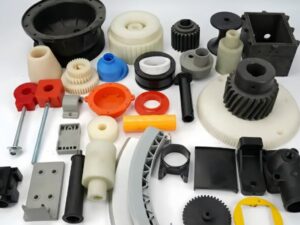
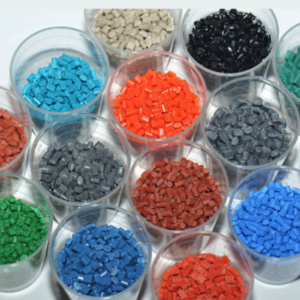
Injection Molding is a foundational manufacturing technique for producing parts in high volumes. The basic concept involves melting plastic pellets and forcefully injecting this molten material into a precision-designed mold cavity. After cooling and solidifying, the mold opens to eject a finished part. This cycle repeats rapidly, making it an exceptionally efficient and ideal manufacturing process for creating identical, complex molded parts with remarkable consistency and intricate details.
Injection Molding Process
The four stages of injection molding
- Clamping
While clamping is closing a mold, it is also crossing over the boundaries of clamping to make a thermal-mechanical seal. The mold closes with enough force to make a seal that can hold the plastic being injected into it. This seal determines how accurate the shape being molded to the part is and is important to make quality components without excess plastic.
- Injection
Injection is a perfectly planned event of volumetric displacement. A screw rotates and acts as a piston, pushing a predetermined quantity of molten polymer into the cavity. This phase is the rheological phase, where a particular rate of injection and pressure is required to fill and replicate the details of the mold before polymerization occurs, affecting the overall part’s fill, structure, and surface finish.
- Cooling
Cooling is the main contributor to cycle time and the most influential factor in the properties of the final part. The heat from the polymer is removed to the coolant channels. The polymer undergoes crystallization (for semi-crystalline polymers) and then solidifies. The design of cooling channels is vital in guaranteeing uniform heat removal, thereby reducing the risk of internal stresses and warping in the material to increase the efficiency of production.
- Ejection
Ejection is the system’s final mechanical engagement with the part. Ejector pins, sleeves, or blades apply a predetermined push force to overcome the polymer that has shrunk and exerted a strong grip on the core. The success of this phase relies completely on design considerations, especially a generous draft angle and a polished surface finish, so that the part can be easily removed without damage.
Process Settings and Management
- Control of Temperature
Control of Temperature affects polymer rheology and polymer crystallisation. Control of the thermal profile within the barrel, nozzle and mold should be sufficient to facilitate optimum flow and solidification of the melt, which governs the mechanical properties, dimension stability and surface quality of the resulting part.
- Settings of Pressure
Settings of Pressure control the volumetric shrinkage and hence the density of the part. Dimension accuracy and structural integrity are ensured by the careful application of holding pressure after injection to pack additional material into the cavity to offset shrinkage and prevent sink and void formation.
- Speed of Injection
Speed of Injection affects the molecular orientation and the alignment of the fibers within composites. The jetting and air trapping defects are controlled by the optimal profiling of the injection speed. The polymer should be subjected to controlled shear history to achieve the desired surface finish and mechanical properties.
- Optimisation of Cooling Time
Optimisation of Cooling Time is the most important parameter in determining cycle time and balancing of the competing priorities is the most important factor in determining the part ejected with sufficient strength to avoid self-faulting due to excessive residual stresses and warping.
Material Selection Guidelines
Commonly Used Materials
Thermoplastics
Polyethylene (PE)
Polyethylene (PE) offers very low cost per part and is extremely chemically resistant and electrically insulating, making it the leading candidate for high-volume container and household commodity applications where ultimate toughness is not required. Some examples include shampoo bottles, food storage containers, chemical drums, and children’s toys.
Polypropylene (PP)
Polypropylene (PP) is superior in fatigue resistance, making it perform better in applications where bending is repeated. Its chemical and heat resistance is also remarkable, making it a versatile plastic Good in the fields of automobile and packaging industries. Some PP applications are in automobile bumpers, food containers, medical syringes, and dishwasher-safe lids.
Polystyrene (PS)
Polystyrene (PS) is used in applications where high clarity and transparency are required. Examples are disposable utensils, transparent displays, and test tube manufacture. Its brittleness, however, may require modification of the design and the use of impact modifiers where durability is a priority. Some examples of where it is used include CD cases, plastic cutlery, test tubes, and housings of appliances.
ABS
Structural integrity is critical in consumer electronics and automotive (vehicle) interiors, where ABS (Acrylonitrile Butadiene Styrene) injection molded parts is almost always used. It is also used in structural components where surface finish and strength are important, such as in the production of automotive interiors and molded parts. ABS is used in computer keyboard keys, LEGO blocks, power tool housings, and automotive dashboard parts.
Engineering Plastics
Nylon (PA)
For applications with moving parts, nylon (PA) is ideal because of its mechanical strength, wear resistance, and its potential to self-lubricate. Some examples of where nylon (PA) is used include gear wheels, bushings, electrical connectors, and sporting equipment.
Polycarbonate (PC)
Applications of Polycarbonate (PC) are extensive because it is one of the most impact resistant, dimensionally stable, and optically clear materials available. It is used in safety glasses, automotive headlamp lenses, medical devices, and protective (impact resistant) glazing.
POM (Polyoxymethylene)
POM (Polyoxymethylene), commonly referred to as acetal, is used where mechanical parts are manufactured due to its mechanical properties. It is strong, dimensionally stable, and has low friction. Some uses include precision gears, conveyor belt links, components for fuel systems, and fasteners.
PBT (Polybutylene Terephthalate)
PBT (Polybutylene Terephthalate) has good heat resistance, low moisture absorption, and provides excellent electrical insulation, making it versatile for applications that are harsh on the component. Sturdy mechanical components in device housings (electrical connectors), automotive sensor bodies, pumps, and keyboard switches are examples of PBT use.

How to Choose the Right Material
Mechanical Properties Requirements
Specify the part and determine the precise strength and stiffness requirements, and we will help in choosing the best material to reduce costs through minimizing over-engineering while maintaining reliability.
Environmental Considerations
We look into realistic exposure of your part to environmental factors such as UV, chemicals, and sterilization. Our expertise in materials guarantees sustainable goals of low material waste by ensuring primitive von- long term performance.
Cost-Performance Analysis
The material costs the most, which is not ideal. We look into the total lifecycle value, and our material choices yield lower overall costs which makes your project an ideal manufacturing process more economically feasible.
Processing Characteristics
Material flow and the stability of your design will be properly synchronized to guarantee efficient production of quality molded parts while maintaining minimal defects at a faster production cycle time.
Principles of Design in Injection Molding
Design Recommendations for Parts
-Uniform Thickness of Walls: Maintaining the same wall thickness should be the first consideration in injection molding design. This guarantees even cooling and flow to eliminate sink marks, warping and internal stresses in molded parts.
-Do Not Incorporate Thick Sections: Thick sections are a primary source of defects as they cool slower, and this precipitates sink marks and voids. If strength becomes a requirement, employ strategic ribbing to replace the overall wall thickening.
-Relaxed Joints: Use gentle, tapered transitions when a thickening of a wall is necessary. Do not use gridwork steps as this produces flow lines, acts as a stress riser, and weakens the part.
Drafting and Undercuts
-Obtain Draft Angles: For all vertical walls, a draft angle of 1-2 degrees is required, and this is necessary to improve the part’s surface finish while preventing damage.
-Avoid Undercuts: They should be eliminated as they complicate the mold and increase the overall cost.
-Do Not Overcomplicate: Keep in mind that increased mold complexity for undercuts, e.g. side actions and collapsible core mechanisms, directly affect the low cost per part goal of the project.
Rib and Boss Design
- Optimum Rib thickness: When designing ribs, consider this injection molding design principle: ribs should not exceed 50-60% the thickness of the neighboring wall. This provides appropriate strength and stiffness of the molded piece and prevents sink marks from showing on the other side of the wall.
- Reinforcing Boss Structures: To improve the reliability of your molded part consider adding ribs or gussets to supports for screw assembly, this will ensure the integrity of the part through assembly and assembly use.
- Generous Radii: When ribs and bosses are provided sufficient base fillets for the ribs and bosses, this will greatly reduce stress concentration and improve the part’s fracture toughness.
Surface Finishes for Molded Parts
Thermoplastic
The range of surface finishes for thermoplastic parts is nearly unlimited and is only determined by the surface of the mold used. The surface can affect the perception of parts greatly and can also affect the ability of a part to cover ejection and flow marks. Examples of such finishes are the polished glossy surface for transparent parts and lenses, and the heavily textured matte finishes that can obscure scratches and enhance the grip. Some options for this are the SPI finishes, SPI A1 for the mirror polish and SPI C1 for fine stone. Examples of custom finishes are chemical texturing and leather grains, as well as painting and pad printing from other processes.
Polished: High gloss, mirror surface is present for lenses and other eye attractive parts.
Textured: Defect hiding, grip enhancement, and matte finish are present for etched surfaces.
EDM: Slight grain presents a natural finish from the mold from electrical discharge machining.
Liquid Silicone Rubber
The range of Liquid Silicone Rubber (LSR) surface finishes is dictated by low fluidity and high-temperature processing. Because of its low viscosity, a glossy surface finish is typical, which is preferred in medical and food-contact applications. This surface finish minimizes bacterial adherence and is easier to clean. In applications where grip is needed, we apply a matte surface finish to the mold. Similar to thermoplastics, LSR is rarely processed post-molding. Therefore, the mold surface finish character is the only factor that defines the finish character of the final part.
Glossy: Smooth, non-porous surface that is highly releaseable, making it ideal for hygienic applications.
Matte: Adds a rough surface finish texture to components to enhance grip and tactile feel.
Grit Blasted: Increased surface roughness provides a satin-like surface that aids air venting in the mold.
Conclusion
Are you ready to take advantage of the accuracy and productivity that comes from injection molding on your next project? Our factory embraces injection molding along with rigorous quality assurance to provide you with top tier molded parts. With low cost/part and low material waste, we are your best manufacturing process partner. Reach out to us to make your parts in your designs.
Frequently Asked Questions (FAQ)
Q:What industries most commonly use injection molding?
A: Because of its scalability and accuracy injection molding is essential for the automotive, medical, consumer electronics and packaging industries.
Q:What is the value of injection molding in relation to the product development cycles?
A:Rapid and high volume production of identical parts, after the first mold is created, significantly shortens time to market.
Q:What is the average production life of an injection production mold?
A:The life of a mold is highly variable and can be in the thousands to millions range of cycles, depending on the mold material and the plastic being worked on.
Q:Is injection molding able to use sustainable, or recycled, materials?
A:Yes, multiple thermoplastics can be reprocessed with recycled materials, achieving some manufacturing sustainability.
Q:What are some of the first considerations for an injection molding project in relation to the costs involved?
A: The average cost of a part is very low at high production volumes, with the initial mold tooling cost being the main outlay for the project.